
At Dilworth Facial Plastic Surgery, patient safety guides every stage of care, from your first consultation through surgery and recovery. If you’re considering rhinoplasty, blepharoplasty, or a deep plane facelift, it’s natural to have questions about how safe the procedure is. I welcome the opportunity to explain the steps my team and I take to prioritize safety throughout your facial plastic surgery experience.
The safest surgical plan is one that’s tailored to your anatomy, your goals, and your unique needs.
Dr. Andrea Garcia and Dr. Joshua Surowitz
Is Rhinoplasty Safe?
Rhinoplasty is generally considered safe when performed by a qualified surgeon with specialized training and experience in both nasal anatomy and airway function, not just its outward appearance. It’s widely considered one of the most technically demanding procedures in facial plastic surgery because changes to the nose’s underlying bone and cartilage must achieve aesthetic goals while maintaining the structural support needed for healthy breathing.
As a dual board-certified facial plastic surgeon, my fellowship training included an extensive focus on rhinoplasty. I approach every case, whether it’s a first-time cosmetic refinement or a revision rhinoplasty, by evaluating the internal nasal structure as well as the external appearance. That structural approach helps preserve nasal support and function while creating balanced, natural-looking results.
If you’re comparing surgeons, our guide to choosing the best rhinoplasty surgeon in Charlotte, NC, walks through the questions and credentials that matter most.
Is Blepharoplasty Safe?
Eyelid surgery (blepharoplasty) is usually considered safe in the hands of a surgeon who understands the delicate anatomy surrounding the eyes. During eyelid surgery, the muscles, fat compartments, and skin must all be balanced precisely. Because the eyelids are delicate, careful surgical planning and technique are important for both appearance and eye function.
Dr. Surowitz and I evaluate each patient’s eyelid position, skin laxity, and fat distribution individually rather than applying a one-size-fits-all technique. We also favor a conservative approach; it’s far easier to remove a bit more tissue at a follow-up than to correct an eyelid that’s had too much taken away. This philosophy is central to how we minimize risk while still achieving a refreshed, natural look.
Is a Deep Plane Facelift Safe?
A deep plane facelift is generally considered safe, but the technique requires specialized training because it involves repositioning the deeper facial tissues and working near branches of the facial nerve. Unlike approaches that primarily tighten the skin, a deep plane facelift releases and repositions deeper structural layers to address signs of aging in the midface, jawline, and lower face.
My fellowship training, mentored by a surgeon internationally recognized for his innovations in facelift and rhinoplasty techniques, was built around this level of precision.
Careful surgical planning also means determining which areas actually need treatment. A deep plane facelift does not address every sign of facial aging; for example, patients with concerns around the eyes may benefit from eyelid surgery as well as or instead of a facelift. We explore those distinctions further in our guide to facelift and blepharoplasty surgical planning.


How We Approach Your Safety, Procedure by Procedure
| Safety Consideration | Rhinoplasty | Blepharoplasty | Deep Plane Facelift |
| Key Structures Involved | Internal nasal framework, airway | Eyelid muscle, fat compartments, skin | Deep tissue layers, facial nerve |
| Why Training Matters Most | Balancing form and breathing function | Precision margin is extremely small | Close proximity to the facial nerve |
| Our Elevated Approach | Structural, not just cosmetic, evaluation | Conservative, individualized technique | Fellowship-level deep plane training |
What Makes a Facial Plastic Surgeon Qualified To Prioritize Your Safety?
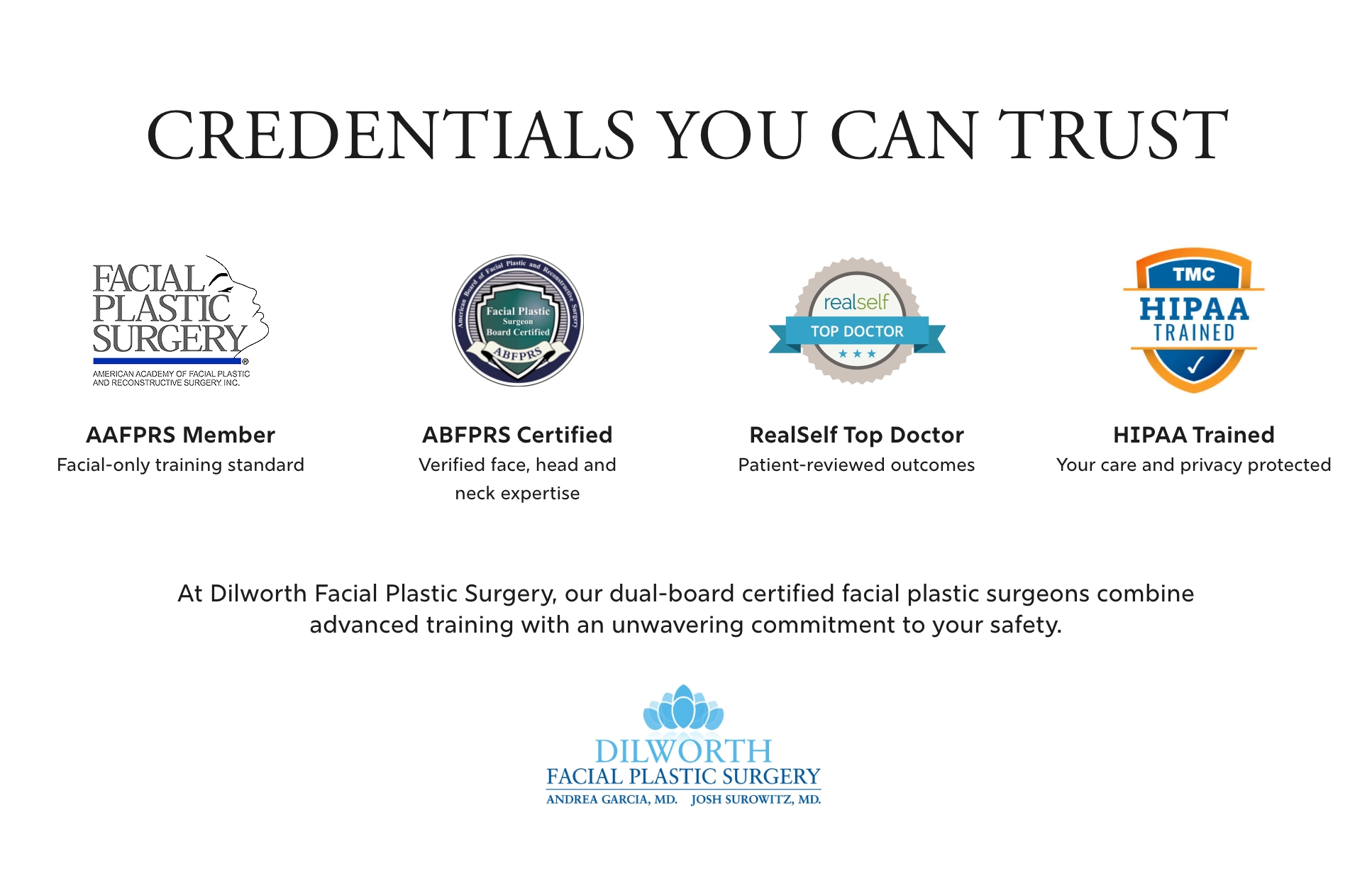
A facial plastic surgeon’s qualifications begin with board certification in facial plastic surgery, not general plastic surgery credentials alone. Dr. Surowitz and I are each certified by both the American Board of Facial Plastic and Reconstructive Surgery (ABFPRS) and the American Board of Otolaryngology–Head and Neck Surgery (ABOHNS), which means our training is focused entirely on the facial region.
We also completed fellowships accredited by the American Academy of Facial Plastic and Reconstructive Surgery (AAFPRS), the specialty’s leading professional organization. When a surgeon’s entire practice is focused on the face, they develop a depth of anatomical knowledge and technical repetition that’s difficult to match with a broader, generalist practice.
How Does a Two-Surgeon Approach Improve Safety?
A two-surgeon approach improves safety by adding a second set of expert eyes to your consultation, surgical planning, and, in many cases, your actual procedure. Dilworth Facial Plastic Surgery is one of the only practices in the Greater Charlotte area built around this collaborative model. Dr. Surowitz and I regularly consult with one another on complex cases, cross-check surgical plans, and bring our independent perspectives to decisions about technique and timing. For patients, that means your care isn’t resting on a single opinion; it’s shaped by two fellowship-trained specialists who are both invested in delivering the best possible outcome.
What Should Happen Before Surgery To Keep You Safe?
Before any surgery, you should have a thorough, unhurried consultation with your surgeon. It should include an honest evaluation of your anatomy, health history, and goals, along with a clear explanation of which technique is being recommended and why.
Dr. Surowitz and I take detailed medical histories, screen for factors that could affect healing or anesthesia, and take the time to ensure your expectations are realistic and achievable given your specific facial structure. We also believe strongly in transparency: If a technique, a combination of procedures, or a particular timeline isn’t in your best interest, we’ll tell you directly, even if that means recommending a more conservative plan than you initially asked for.
Ready To Discuss Your Safety and Your Goals?
Safety and beautiful, natural-looking results aren’t competing priorities. In our experience, they go hand in hand. If you’re considering facial plastic surgery in Charlotte, we would welcome the chance to walk you through our approach in person.
Request a consultation with Dilworth Facial Plastic Surgery today, and let’s talk about what a safe, personalized surgical plan looks like for you.
Leave a Reply